
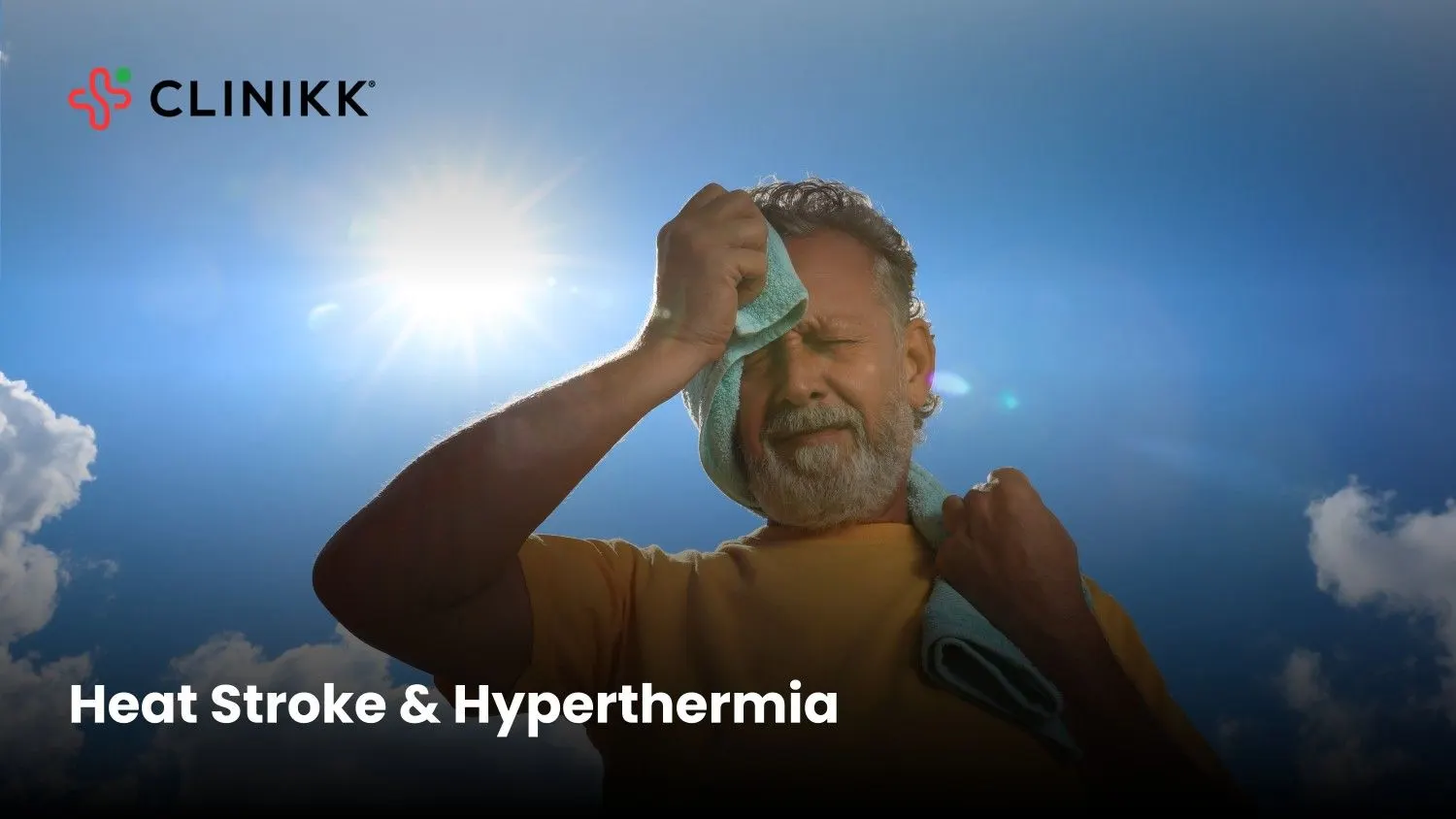
What is Heat Stroke? Heat strokes, also known as hyperthermia, occur when your body temperature rises above 103°F (39.4°C) while the body isn’t able to cool itself. This is a medical emergency requiring immediate treatment. Definition: Hyperthermia is a condition where core body temperature rises abnormally due to the body's inability to regulate heat.
How Body Temperature Regulation Works
Normal body temperature is approximately 98.6°F (37°C). The body maintains this through several cooling mechanisms:
-
Sweating: Perspiration evaporates from skin, releasing heat
-
Vasodilation: Blood vessels expand, directing blood toward the skin surface
-
Increased respiration: Faster breathing releases heat through the lungs
-
Increased heart rate: Faster circulation distributes blood for cooling
Whereas dehydration prevents normal sweating by stopping the body’s primary cooling mechanism. When sweating stops, the core body temperature rises rapidly, leading to a heat stroke.
Heat Stroke Symptoms
Recognize these warning signs immediately:
Physical Symptoms
-
Core body temperature above 103°F (39.4°C)
-
Hot, dry skin (little or no sweating)
-
Rapid pulse
-
Dizziness
-
Nausea
Neurological Symptoms
-
Confusion
-
Altered mental status
-
Irritability
-
Loss of consciousness
-
Seizures (in severe cases)
Emergency: High core body temperature + confusion + hot, dry skin. Contact Clinikk Health Hub emergency support or emergency services immediately.
Also read: Heat Wave in India 2026: Heat Stroke, Heat Exhaustion, Symptoms, and How to Stay Safe
Heat Stroke Causes
Causes like prolonged heat exposure, excessive clothing, and high humidity are some potential causes of heat stroke, along with the following:
Environmental Heat Exposure
1. Prolonged exposure to extreme ambient heat
-
High humidity reduces evaporative cooling
-
Enclosed vehicles in direct sunlight (reaches 140°F in 20 minutes)
-
Indoor environments without air conditioning during heat waves
-
Intense physical exercise in hot conditions
-
Inadequate water intake during activity
-
Exercise on dark or reflective surfaces
-
Excessive clothing or gear during activity
Risk Factors
2. Young children (ages 0-4)
-
Elderly adults
-
Individuals with obesity
-
Athletes and outdoor workers
-
People with chronic conditions (heart disease, diabetes, hypertension)
-
People taking medications affecting thermoregulation
How to Prevent Heat Stroke?
Keep yourself hydrated throughout the day, wear light and loose-fitting clothes, and avoid peak heat hours along with the following:
Hydration
-
Drink water continuously throughout the day
-
Increase intake during physical activity (every 15-20 minutes)
-
Avoid sugary drinks and excessive caffeine
-
Carry a water bottle in hot conditions
Clothing & Protection
-
Wear light-colored, loose-fitting clothing
-
Use a wide-brimmed hat
-
Apply sunscreen (SPF 30+)
-
Choose breathable fabrics
Activity Management
-
Take frequent breaks in shaded or air-conditioned areas
-
Avoid peak heat hours (10 am-4 pm)
-
Reduce intensity during heat exposure
-
Never leave anyone in a parked vehicle
Environmental Awareness
-
Monitor heat wave warnings
-
Stay indoors during extreme heat alerts
-
Check on elderly and vulnerable individuals
-
Never leave pets in vehicles
Personalized Prevention: Consult Clinikk Health Hub doctors for personalized heat safety guidance based on your health conditions and medications.
Also read: What are Viral Fever Symptoms, Causes, Diagnosis & Treatment
Heat Stroke: Emergency Response
First Aid While Waiting for Emergency Services
-
Move to a cool environment immediately
-
Apply cool water to skin (spray bottle or wet cloth)
-
Place ice packs on neck, armpits, and groin (major blood vessels)
-
Remove unnecessary clothing
-
Give water only if the person is conscious and alert
-
Do not give aspirin or pain medication
-
Remain with the person until emergency responders arrive
Heat Stroke vs. Heat Exhaustion
| Characteristic | Heat Exhaustion | Heat Stroke |
|---|---|---|
| Core Body Temperature | Normal to 104°F | Above 104°F |
| Sweating | Heavy sweating | Little or no sweating |
| Mental Status | Alert and clear thinking | Confused or unconscious |
| Skin | Pale, clammy, cool | Red, hot, dry |
| Action Required | Cool and monitor; seek medical care if no improvement | IMMEDIATELY |
Heat Exhaustion Management: Move to a cool location, provide water, and cool the body. Heat stroke requires hospitalization and cannot be managed at home. Clinikk Health Hub physicians can advise on recovery and prevention.
Related Heat-Related Conditions
Heat Syncope
Fainting from heat exposure due to a blood pressure drop.
Treatment: Lie flat, elevate legs, move to a cool area, and provide water.
Heat Cramps
Painful muscle spasms from fluid and electrolyte loss.
Treatment: Rest in a cool area, drink water with electrolytes, gentle stretching.
Malignant Hyperthermia
Rare genetic condition causing a dangerous reaction to certain anesthesia drugs. Not caused by environmental heat. Requires pre-surgical screening.
When to Seek Medical Care
Seek immediate emergency care if:
-
Core body temperature above 103°F (39.4°C)
-
Confusion or altered mental status
-
Loss of sweating in hot conditions
-
Severe headache or dizziness
-
Heat exhaustion not improving with rest
-
Any heat stroke symptoms
A follow-up medical evaluation is essential after heat stroke to assess organ function and prevent complications.
Post-Heat Stroke Care: Book a consultation with Clinikk Health Hub physicians for post-incident medical evaluation and long-term prevention strategies.
Frequently Asked Questions
Can heat stroke be fatal?
Yes. Heat stroke can cause multi-organ failure and death. Rapid cooling within the first minutes significantly improves outcomes.
How quickly does heat stroke develop?
Onset ranges from 30 minutes to several hours depending on temperature, sun exposure, activity level, and hydration status. Exertional heat stroke can develop rapidly in athletes.
What’s the difference between classic and exertional heat stroke?
Classic heat stroke results from environmental heat exposure. Exertional heat stroke occurs during physical activity. Both are medical emergencies requiring identical treatment.
Can heat stroke occur indoors?
Yes. Indoor environments without air conditioning during heat waves or strenuous exercise without proper ventilation can cause heat stroke.
Why are athletes particularly vulnerable?
Muscle contractions generate significant internal heat. Combined with environmental heat, inadequate hydration, and continued exertion, core temperature rises rapidly.
Is heat stroke preventable?
Yes. Proper hydration, appropriate clothing, activity modification, heat awareness, and monitoring of at-risk populations prevent most cases.
Key Points
-
Heat stroke is life-threatening and requires immediate emergency response
-
Symptoms: High core temperature + dry skin + confusion = emergency
-
Rush to a hospital immediately; begin cooling measures while waiting
-
Prevention: Hydration, appropriate clothing, activity management, heat awareness
-
Never leave children or pets in vehicles
-
Monitor vulnerable populations during heat events
-
Seek medical follow-up after heat stroke to assess complications
Get Medical Guidance from Clinikk Health Hub
Clinikk Health Hub physicians provide:
-
Personalized heat stroke risk assessment
-
Medication and health condition review for heat sensitivity
-
Safe summer activity planning
-
Post-incident medical evaluation
-
Guidance for athletes and workers in hot environments
Book a consultation with Clinikk Health Hub today for personalized guidance on heat stroke prevention and management.