
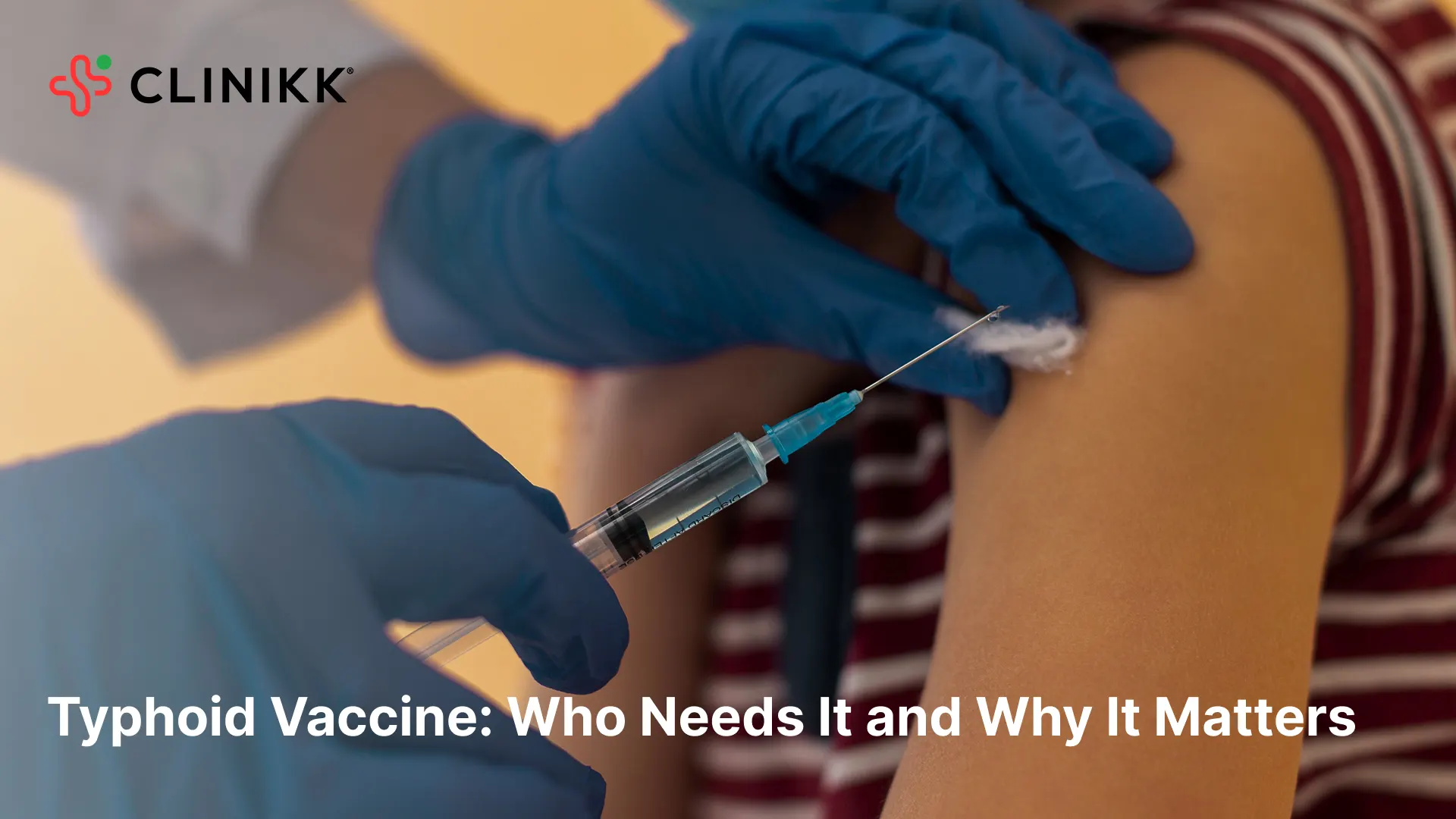
Typhoid fever remains a significant public health concern in India and many parts of the developing world. Caused by the bacteria Salmonella typhi, this infection spreads through contaminated food and water, making it particularly common in areas with inadequate sanitation. While typhoid fever treatment has improved considerably, prevention through vaccination remains the most effective strategy.
Understanding who should get the typhoid vaccine, how it works, and what protection it offers can help you make informed decisions about safeguarding yourself and your family.
Typhoid 101: The Basics
So what exactly is typhoid fever?
It’s an infection caused by bacteria called Salmonella typhi.
You catch it by eating or drinking something contaminated with infected faeces. Contaminated water, unwashed vegetables, or food handled by someone carrying the bacteria are the usual culprits.
Here’s what makes typhoid tricky: symptoms don’t show up immediately. The incubation period can stretch from one to four weeks. By the time you realise something’s wrong, the bacteria have already spread through your intestines and bloodstream.
Common Symptoms of Typhoid
-
Fever that keeps climbing, sometimes hitting 104°F
-
Pounding headaches
-
Complete loss of appetite
-
Stomach pain that’s hard to pinpoint
-
Either diarrhoea or constipation
-
Extreme weakness and fatigue
-
Sometimes, faint rose-coloured spots on the chest
Left untreated, typhoid can lead to intestinal bleeding, perforation, and serious complications. That’s why prevention matters.
Must read: Headache Treatment in Bangalore: Complete Relief at Clinikk Health Hub
The Vaccines: What’s Available?
India has a few different typhoid vaccines available.
The Regular Injectable Vaccine
This is what most adults get — a single shot that protects you for about 2-3 years.
Quick, simple, and widely available.
Children above 2 years can get it too.
Typhoid Conjugate Vaccine (TCV)
This newer vaccine offers stronger and longer-lasting protection.
It can be given to babies as young as 6 months.
The government has added it to the national immunisation programme for children.
You may see it called Typbar-TCV in private clinics.
Oral Vaccine
Less common in India, but still available.
You take capsules over a few days instead of getting an injection.
Protection usually lasts around 5 years.
Why Bother Getting Vaccinated?
You Significantly Reduce Your Risk
No vaccine is perfect, but vaccinated individuals who still contract typhoid usually experience a much milder illness.
Protection Lasts for Years
One shot can protect you for 2-3 years minimum, and TCV protection may last even longer.
Drug-Resistant Typhoid Is Increasing
Some typhoid strains no longer respond well to standard antibiotics.
When treatment becomes harder, prevention becomes even more important.
You Help Protect Others
Fewer infections mean fewer opportunities for the bacteria to spread through the community.
Must read: Stomach Ache Treatment, Symptoms, Causes & Diagnosis
Who Actually Needs This Vaccine?
-
Children: Typhoid vaccination is recommended for all children in India. The TCV vaccine is usually given around 9-12 months of age.
-
Travellers: People travelling to rural India, Southeast Asia, Africa, or South America should get vaccinated at least two weeks before travel.
-
People in Areas with Poor Water Quality: If sanitation or drinking water quality is uncertain, vaccination provides an additional layer of protection.
-
Healthcare Workers: Those exposed to patients or infectious samples should be vaccinated.
-
Laboratory Staff: Anyone working directly with Salmonella typhi bacteria requires vaccination.
-
Family Members of Typhoid Patients: Vaccination may help reduce spread within households.
What About the Cost?
At private clinics, the standard injectable vaccine usually costs between ₹200-500.
The TCV vaccine costs more, generally around ₹1,000-1,500.
Government health centres now provide TCV free for eligible children under the national immunisation programme.
After the Shot: What to Expect
Most people experience only mild side effects.
Common reactions include:
-
Mild soreness at the injection site
-
Slight fever
-
Headache
These symptoms generally settle within 1-2 days.
Serious allergic reactions are extremely rare.
If you experience breathing difficulty or severe swelling after vaccination, seek immediate medical attention.
Must read: Heart Attacks in Women: Why the Warning Signs Are Easy to Miss
The Vaccine Isn’t a Free Pass
Vaccination reduces your risk significantly, but it doesn’t eliminate it entirely.
You still need to:
-
Drink bottled or boiled water when unsure about water quality
-
Avoid unhygienic street food
-
Wash hands properly before meals
-
Be cautious with raw salads and cut fruits when eating out
Think of the vaccine as one important layer of protection.
When Symptoms Show Up Anyway
Vaccinated or not, if you develop a persistent high fever along with stomach pain and weakness, consult a doctor.
Typhoid diagnosis usually involves a blood test.
When treated early, most people recover fully within a few weeks with proper antibiotics and supportive care.
Avoid self-medicating with random antibiotics, as this can worsen antibiotic resistance and delay recovery.
Ready to Get Protected?
Typhoid vaccination takes only a few minutes but offers years of protection.
At Clinikk Health Hub, we provide both standard and TCV vaccines for children and adults.
Our doctors can help you decide which vaccine is appropriate for your age, health status, and travel needs.
Book your vaccination appointment today and stay protected against typhoid fever.